

What Is Restorative Dentistry? Procedures, Benefits and Costs Explained
Restorative dentistry repairs and replaces damaged teeth to restore function and health — from fillings to implants, here is everything you need to know.

DentalHealth Team
Jan 15, 2026Updated Jun 30, 2026 8 min read
Overview
Restorative dentistry focuses on diagnosing and treating conditions that damage or destroy tooth structure, including decay, fractures, and tooth loss. The goal is to repair or replace teeth so that they function properly and look natural. Restorative procedures protect remaining tooth structure, restore the ability to chew and speak comfortably, and prevent further deterioration of oral health.
Unlike cosmetic dentistry, restorative treatments address clinical problems and are often at least partially covered by dental insurance. Many procedures achieve both functional and aesthetic results.
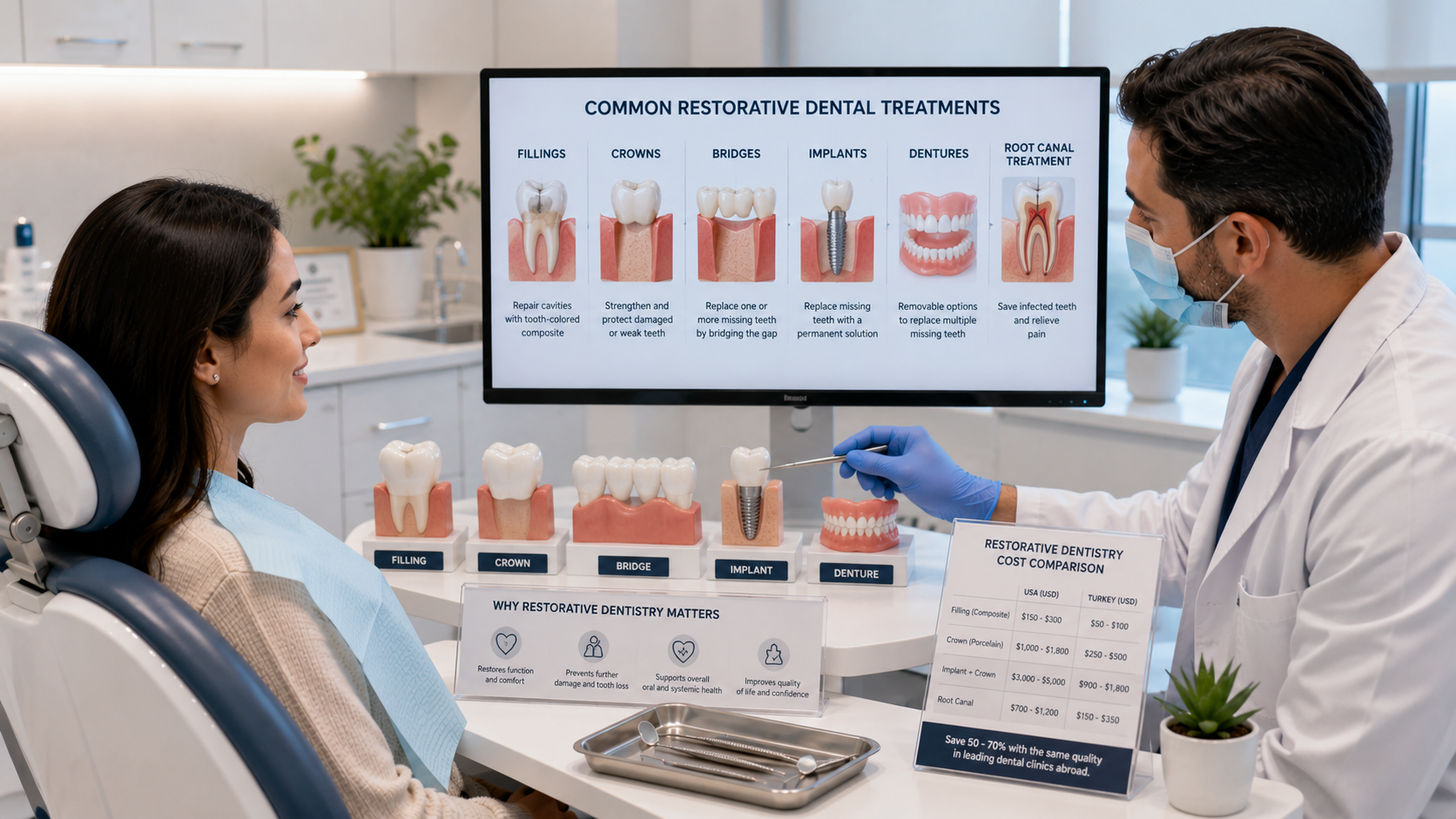
Common Restorative Dental Treatments
Dental Fillings
A filling is the most frequently performed restorative treatment. When decay removes part of a tooth, the dentist cleans the affected area and fills it with a material that restores the tooth’s shape and strength. Modern composite resin fillings match the natural colour of teeth and bond directly to tooth structure. Amalgam fillings are more durable and less expensive but are visually noticeable. Most fillings can be completed in a single appointment.
Dental Crowns
A crown is a tooth-shaped cap placed over a damaged, decayed, or weakened tooth to restore its shape, size, strength, and appearance. Crowns are recommended when a tooth is too damaged for a filling, after a root canal treatment, or to anchor a dental bridge. They are made from porcelain, ceramic, metal alloys, or a combination of materials. Traditional crowns require two appointments, but same-day crowns using CAD/CAM technology are now available in many practices.
Dental Bridges
A bridge replaces one or more missing teeth by anchoring an artificial tooth to the natural teeth or implants on either side of the gap. Traditional bridges require the adjacent teeth to be prepared and crowned to support the bridge. Implant-supported bridges do not affect neighbouring teeth and are generally the preferred option when possible.
Dental Implants
A dental implant is a titanium post surgically placed into the jawbone to act as an artificial tooth root. Once healed, a crown is attached to the implant. Implants are considered the gold standard for tooth replacement because they are permanent, preserve jawbone density, and function like natural teeth. The full process can take three to nine months.
Dentures
Dentures are removable appliances used to replace multiple missing teeth. Full dentures replace all teeth in an arch, while partial dentures fill in where some natural teeth remain. Modern dentures are more comfortable and natural-looking than earlier versions. Implant-supported dentures offer greater stability and are increasingly popular.
Root Canal Treatment
Root canal treatment removes infected or inflamed pulp from inside the tooth. The canal is cleaned, disinfected, and sealed. Despite its reputation, modern root canal treatment is no more uncomfortable than having a filling. It saves a tooth that would otherwise need to be extracted.
Why Restorative Dentistry Matters
Delaying restorative treatment almost always leads to more serious and expensive problems. A small cavity left untreated can progress to pulp infection requiring root canal treatment or eventually tooth extraction. A missing tooth that is not replaced causes neighbouring teeth to shift, alters bite alignment, and leads to jawbone loss over time.
Research has linked untreated gum disease and tooth loss to cardiovascular disease, diabetes complications, and respiratory conditions. Restoring oral health is an investment in overall wellbeing.
Restorative Dentistry Costs
In the USA, a composite filling typically costs USD 150 to USD 300. A porcelain crown ranges from USD 1,000 to USD 1,800. A dental implant with crown can cost USD 3,000 to USD 5,000. These same treatments can cost 50 to 70 percent less in dental tourism destinations such as Turkey, Mexico, and Hungary.
Frequently Asked Questions
Is restorative dentistry the same as cosmetic dentistry?
No. Restorative dentistry focuses on repairing or replacing damaged and missing teeth to restore function and health. Cosmetic dentistry focuses on improving appearance. The two overlap in many procedures, such as tooth-coloured fillings and porcelain crowns, which restore function and improve aesthetics at the same time.
How long does restorative dental work last?
Composite fillings typically last seven to ten years. Porcelain crowns last 10 to 15 years on average. Dental implants can last a lifetime with proper care. Regular check-ups, good oral hygiene, and avoiding habits such as teeth grinding extend the lifespan of all restorations.
Does insurance cover restorative dentistry?
Many dental insurance plans cover basic restorative treatments such as fillings and crowns, though coverage levels and annual limits vary widely. Implants are often excluded from standard plans. Always verify your coverage before treatment.
Dental news for professionals, weekly.
Join dental professionals getting our weekly brief.
No spam. Just useful dental intelligence.
Need a dental consultation?
Send your question and we will route it to the right contact.