

What Is Periodontics? Gum Disease, Treatment and Prevention Explained
Gum disease affects nearly one in five adults globally and is linked to heart disease and diabetes — here is what periodontics does and why it matters.

DentalHealth Team
Mar 26, 2026Updated Jun 30, 2026 8 min read
Overview
Periodontics is the dental specialty concerned with the health of the tissues that support the teeth, primarily the gums, the periodontal ligament, and the jawbone. A periodontist is a gum specialist who completes three years of postgraduate training after dental school, focusing on the diagnosis, prevention, and treatment of periodontal (gum) disease, as well as the placement of dental implants.
The World Health Organization estimates that severe periodontal disease affects approximately 19 percent of the global adult population. Beyond the mouth, untreated gum disease has been linked to cardiovascular disease, type 2 diabetes, adverse pregnancy outcomes, and respiratory disease.
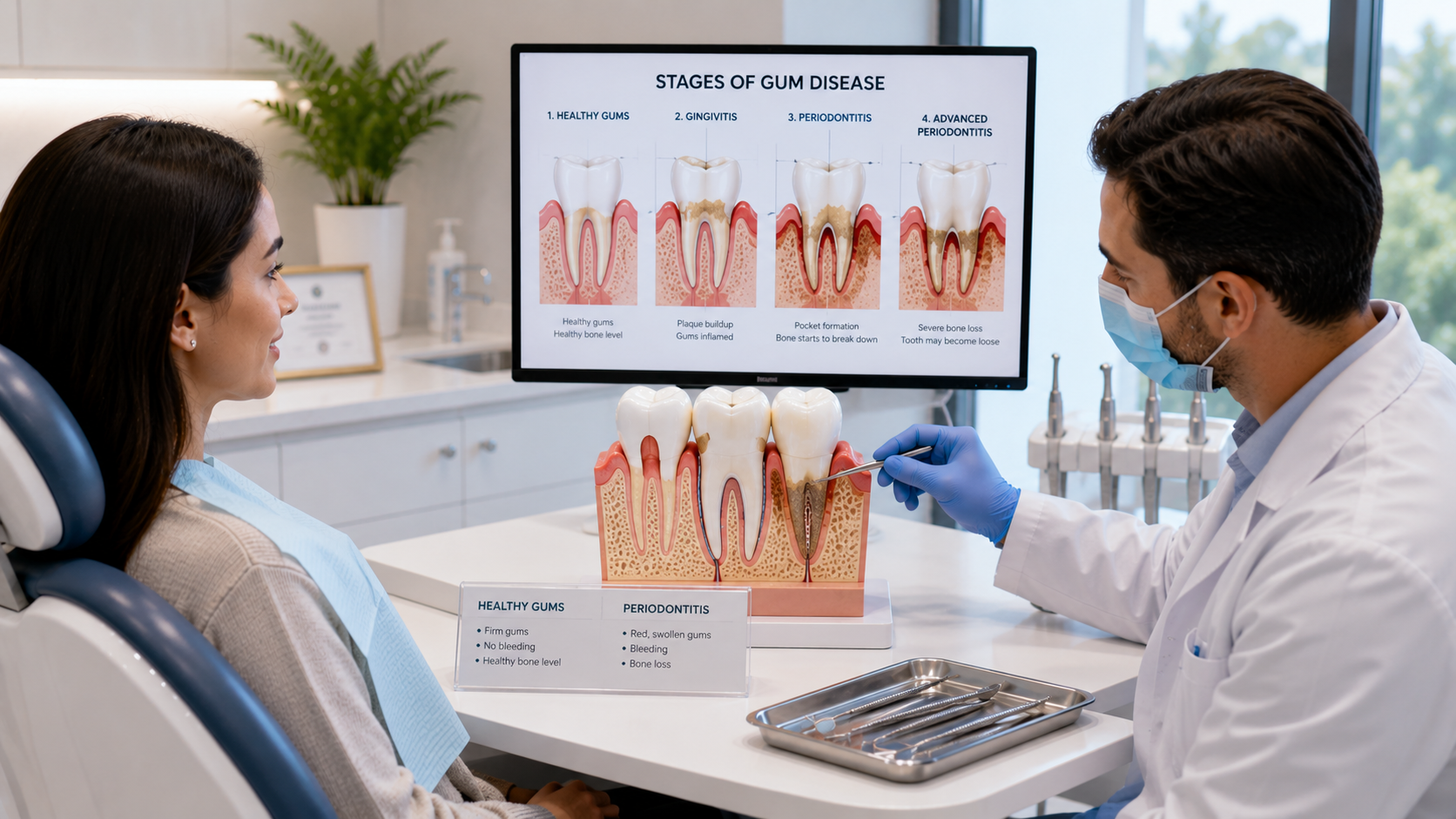
Stages of Gum Disease
Gingivitis
Gingivitis is the earliest and most reversible stage of gum disease. It is caused by the accumulation of plaque along the gum line. Symptoms include red, swollen, and bleeding gums, particularly during brushing or flossing. At this stage, no bone or connective tissue damage has occurred. Gingivitis is completely reversible with professional cleaning and improved home oral hygiene.
Periodontitis
If gingivitis is left untreated, it can progress to periodontitis, a more serious infection in which bacteria spread below the gum line and begin to destroy the bone and tissue supporting the teeth. Symptoms include persistent bad breath, gum recession, tooth sensitivity, and in advanced cases, tooth mobility and loss.
How Periodontists Treat Gum Disease
Scale and Root Planing
Scale and root planing, also known as a deep clean, is the most common non-surgical treatment for periodontitis. The periodontist removes plaque and tartar deposits from below the gum line and smooths the root surfaces to discourage bacterial reattachment. This is typically performed under local anaesthesia over one or two appointments.
Periodontal Surgery
In cases where non-surgical treatment does not adequately control the disease, periodontal surgery may be required. Flap surgery involves lifting back the gums to allow thorough cleaning of the root and bone surfaces. Bone grafting and guided tissue regeneration procedures aim to rebuild bone that has been destroyed by infection. Gum graft surgery treats gum recession by covering exposed roots with tissue taken from the palate or a tissue bank.
Maintenance Therapy
After active treatment, patients with a history of periodontal disease require ongoing maintenance visits every three to four months. These visits involve professional cleaning of pockets, assessment of gum health, and early detection of any disease recurrence.
Gum Disease and Systemic Health
Chronic inflammation and bacteria from gum disease can enter the bloodstream, contributing to inflammation elsewhere in the body. Studies have found associations between periodontitis and an increased risk of heart attack, stroke, worsening diabetes control, preterm birth, low birth weight, and chronic kidney disease.
How to Prevent Gum Disease
Brush teeth twice daily with a fluoride toothpaste. Floss or use interdental brushes daily. Use an antiseptic mouthwash if recommended by your dentist. Avoid smoking, which significantly increases the risk and severity of gum disease. Maintain regular dental appointments every six months or more frequently if advised.
Frequently Asked Questions
What are the signs of gum disease?
Common signs include red, swollen, or tender gums; gums that bleed when you brush or floss; persistent bad breath; gums that appear to be pulling away from the teeth; and teeth that are loose or shifting. Any of these symptoms warrants a prompt dental evaluation.
Can gum disease be cured?
Gingivitis can be completely reversed with proper treatment and improved oral hygiene. Periodontitis cannot be fully cured because the bone and tissue destruction that has occurred does not fully regenerate. However, with appropriate treatment and ongoing maintenance, the disease can be effectively controlled and tooth loss prevented.
How much does periodontal treatment cost?
Scale and root planing typically costs between USD 200 and USD 300 per quadrant in the USA. Surgical procedures range from USD 1,000 to USD 3,000 per quadrant. Many dental insurance plans provide partial coverage for periodontal treatment.
Dental news for professionals, weekly.
Join dental professionals getting our weekly brief.
No spam. Just useful dental intelligence.
Need a dental consultation?
Send your question and we will route it to the right contact.